
Overview
Falcon is a full-stack embedded payments and credit platform, empowering businesses to launch and manage innovative credit card programs seamlessly.
💳 What is a Credit Card?
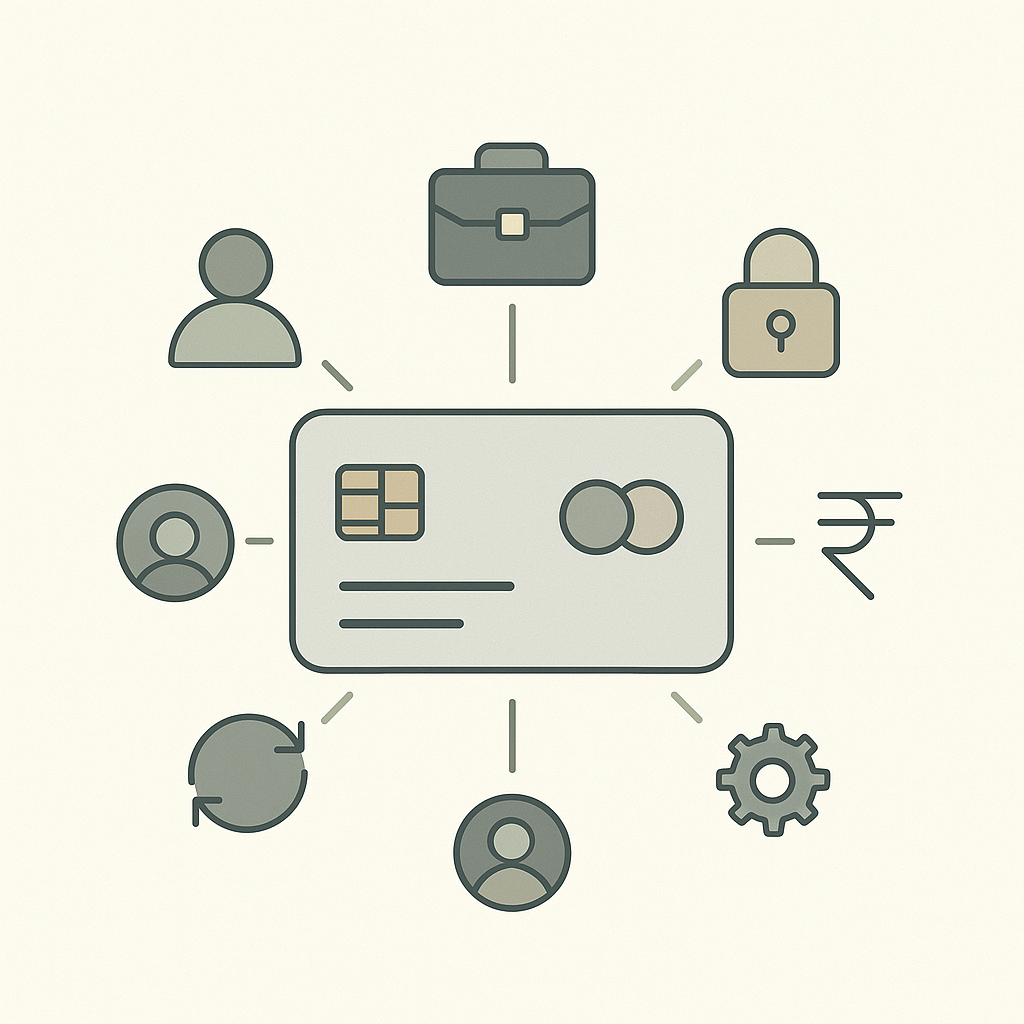
A credit card allows users to borrow funds from an issuer (typically a bank or financial institution) up to a predetermined limit. Cardholders can make purchases or withdraw cash, repaying the borrowed amount with applicable interest. Responsible usage involves timely repayments to avoid debt accumulation.
👥 Who Can Use Credit Cards?
Individuals of legal age (typically 18 and above) with a satisfactory credit history are eligible for credit cards. Approval factors include:
- Credit score and history
- Income and employment status
- Credit utilization patterns
Issuers may also consider additional criteria to assess creditworthiness.
🗂️ Types of Credit Cards
- Individual Credit Cards: Issued to individuals for personal use, with credit limits and rewards based on personal financial profiles.
- Corporate Credit Cards: Provided to businesses for employee use, facilitating business-related expenses like travel and office supplies.
🧩 Credit Card Variations
| Variations | Description |
|---|---|
| Standard Credit Cards | Basic cards with fixed interest rates, often offering rewards or cashback. |
| Rewards Credit Cards | Offer incentives like points, miles, or cashback for specific spending categories. |
| Balance Transfer Credit Cards | Allow transferring existing high-interest balances to a card with a lower interest rate. |
| Secured Credit Cards | Require a security deposit, suitable for individuals with limited or poor credit history. |
| Unsecured Credit Cards | Do not require a deposit; approval is based on creditworthiness. |
| Charge Cards | Require full balance payment each month, often with higher limits and exclusive rewards. |
| Business Credit Cards | Designed for small business owners, offering features like expense tracking and employee cards. |
| Student Credit Cards | Tailored for college students to help build credit history, usually with lower limits and student-specific rewards. |
💰 Credit Card Limits
Credit limits are set by issuers based on factors like credit score, income, and repayment history. In India, the Reserve Bank of India (RBI) mandates that individuals can carry a maximum debt of 50% of their credit limit. For example, with a ₹1,00,000 limit, the maximum allowable debt is ₹50,000. Interest cannot be charged on amounts exceeding the credit limit, and late payment charges are capped.
💼 Business Use Cases
There are several business use cases for credit cards, including:
- Purchasing Goods and Services: Streamline procurement from suppliers and vendors.
- Travel and Entertainment Expenses: Manage employee travel, lodging, and meal expenses efficiently.
- Employee Expense Management: Utilize features like employee cards and online expense tracking for better oversight.
- Building Credit History: Responsible usage can enhance a business's credit profile, aiding in future financing.
- Earning Rewards: Leverage cashback, points, or miles to offset business expenses.
- Managing Cash Flow: Use credit to spread out payments, improving liquidity management.
Updated about 1 year ago
Related Information
Refer to the following pages for additional information about credit cards.